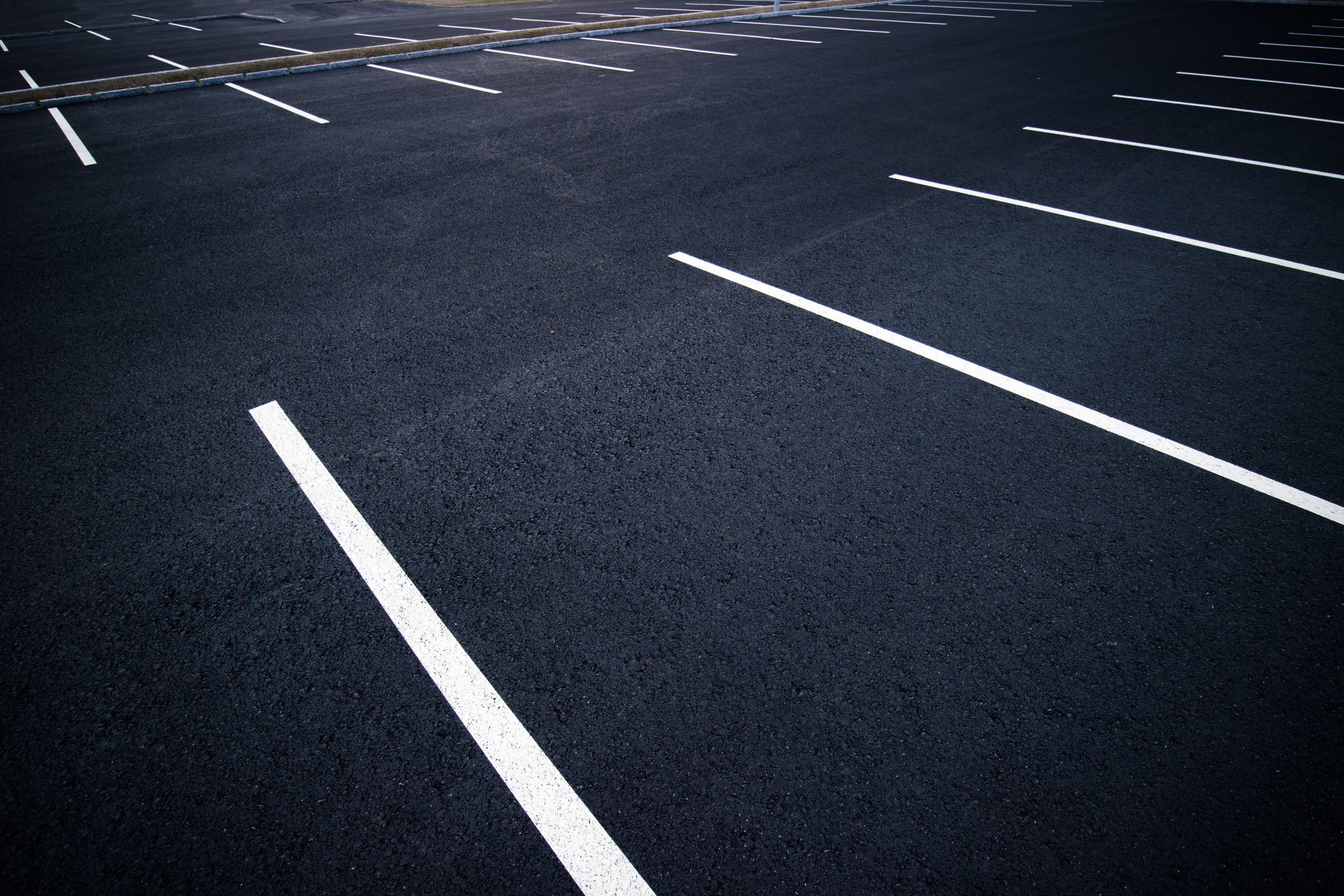
Aerial view of a freshly striped commercial parking lot

Sealcoating — South King + Pierce County Lots

Pacific Northwest rain is hard on asphalt. Sealcoat protects the lot you’ve already paid for.

Free estimate by phone.

What waiting on sealcoat actually costs

A commercial asphalt lot is built to last fifteen to twenty years if it's maintained. Without sealcoat, the same lot is ready for repaving at eight to twelve. That's not a small difference. Sealcoat every two to three years on a commercial lot runs a few hundred to a few thousand dollars depending on size. Full repave runs tens of thousands. The math always favors keeping up.

The hard part isn't the cost decision. It's noticing in time. By the time the lot looks gray instead of black, the surface has already been letting water through for a while. By the time hairline cracks show up, the binder has already oxidized. Sealcoat works best when it goes on before you can tell anything's wrong. That's the case we make to property managers on the walk: it doesn't look broken yet, and that's exactly why we're here.

Why Pacific Northwest asphalt fails early

Rain seeps into the surface. Freeze-thaw cycles widen the openings every winter. Summer UV cooks the binder that holds the aggregate together. None of that shows up on day one. By year five, the surface is rougher. By year eight, the small cracks are bigger. By year ten, you're choosing between repaving and patching the worst spots.

Sealcoat is the barrier that blocks the four things that age asphalt early: water, oxygen, oil and chemical staining, and UV. We apply asphalt-emulsion sealcoat exclusively. Coal-tar sealer has been illegal in Washington since 2011 because of how it leaches into stormwater. Emulsion is what's allowed here and what we use everywhere.

What's in a sealcoat visit

The walkthrough comes first. We look for soft spots, deep cracks, and anything sealcoat won't fix on its own. You get the honest answer about whether sealcoat is the right next step or whether something else has to happen first.

Once we're scheduled, here's the work:

  • Power-cleaning the surface so the emulsion bonds to clean asphalt
  • Crack filling on anything quarter-inch or wider before we seal
  • Two coats of asphalt-emulsion sealcoat applied at proper thickness
  • Twenty-four hour cure window before traffic comes back
  • Phased work on larger lots so half stays open while the other half cures
  • Striping the next morning if the lines need a refresh anyway

The two coats matter. One coat saves money on day one and loses a year of life on the lot. We don't do single-coat work.

When we do this work — the PNW window

May through September. Surface and overnight temperatures both need to be 50°F or higher for twenty-four hours after we apply, or the emulsion won't cure properly. Outside that window we don't do sealcoat work, because a job that doesn't cure is a job that fails inside a year.

Booking earlier in spring usually clears the summer calendar. Once we hit July most weeks are spoken for, and citations and repairs take priority over routine sealcoat work. If you know you're going to need this work done, the call in March or April is what gets you on the schedule.

What it runs

Sealcoat is priced per square foot of asphalt, with adders for crack-filling, patching, and striping on the same trip. A small lot under 5,000 square feet runs at the low end. A retail lot between 20,000 and 40,000 square feet with crack-fill and a stripe-back the next morning runs at the higher end. Biggest cost movers are how much crack-fill the lot needs and whether the surface needs a heavier power-wash. Free walk, written quote, no posted rate because lots don't price cleanly without seeing them.

Common reasons sealcoat jobs fail early

We see the same five failures over and over on lots that have been sealed by someone else:

  • Crack-fill skipped: the sealcoat bridges the gap on day one and splits when the cracks open again in two years
  • Single coat instead of two: the lot loses about a year of life for the savings on coat number two
  • Applied below 50°F or with rain inside the cure window: the emulsion never bonded in the first place
  • Bargain product diluted past spec: thins the binder until it can't carry the aggregate
  • Coal-tar product (illegal in Washington since 2011): also doesn't pass any stormwater inspection

If you've been burned on a previous sealcoat job, tell us what happened on the walk. We can usually spot which one of these was the failure mode.

FAQ

How often should we sealcoat? Every two to three years on a typical commercial lot. Heavy-traffic retail may need annually on entrances and drive aisles.

How long before traffic comes back? Twenty-four hours after the second coat cures. We can phase the lot so half is open while the other half cures.

Will sealcoat fix my cracks? Hairlines under a quarter-inch, yes — the seal bridges them. Anything wider needs crack filling first or the sealcoat splits along the crack inside two years.

Why not coal-tar like other states use? Coal-tar has been banned in Washington since 2011 because of runoff into stormwater. We use asphalt-emulsion, which is what's allowed and what we'd use anyway.

Service area

Kent (Kent Valley Industrial, East Hill, Kent Station, Riverbend), Auburn (downtown, Lakeland Hills, Auburn Way corridor), Federal Way (downtown, Twin Lakes), Tacoma, Renton (downtown, Highlands), Covington, and the surrounding South King and Pierce County area.

Ready to protect the lot before the next rainy season?

Call (253) 264-5064 or request a free estimate. Free walk, real number after.

Property Managers Choose Us

Precision Craftsmanship

We apply every line, seal, and marking with care, so the finished result looks sharp, holds up, and reflects well on your property.

Straightforward Service

Clear communication, fair pricing, and a commitment to doing the job right without cutting corners.

Convenient Scheduling

We work around your schedule—including evenings and weekends—so your lot stays open and your operations stay uninterrupted.

Lasting Protection

Our sealcoating helps preserve your pavement, reduce wear, and prevent costly repairs down the road.

Disabled veteran-owned

Family operated

Built on integrity